

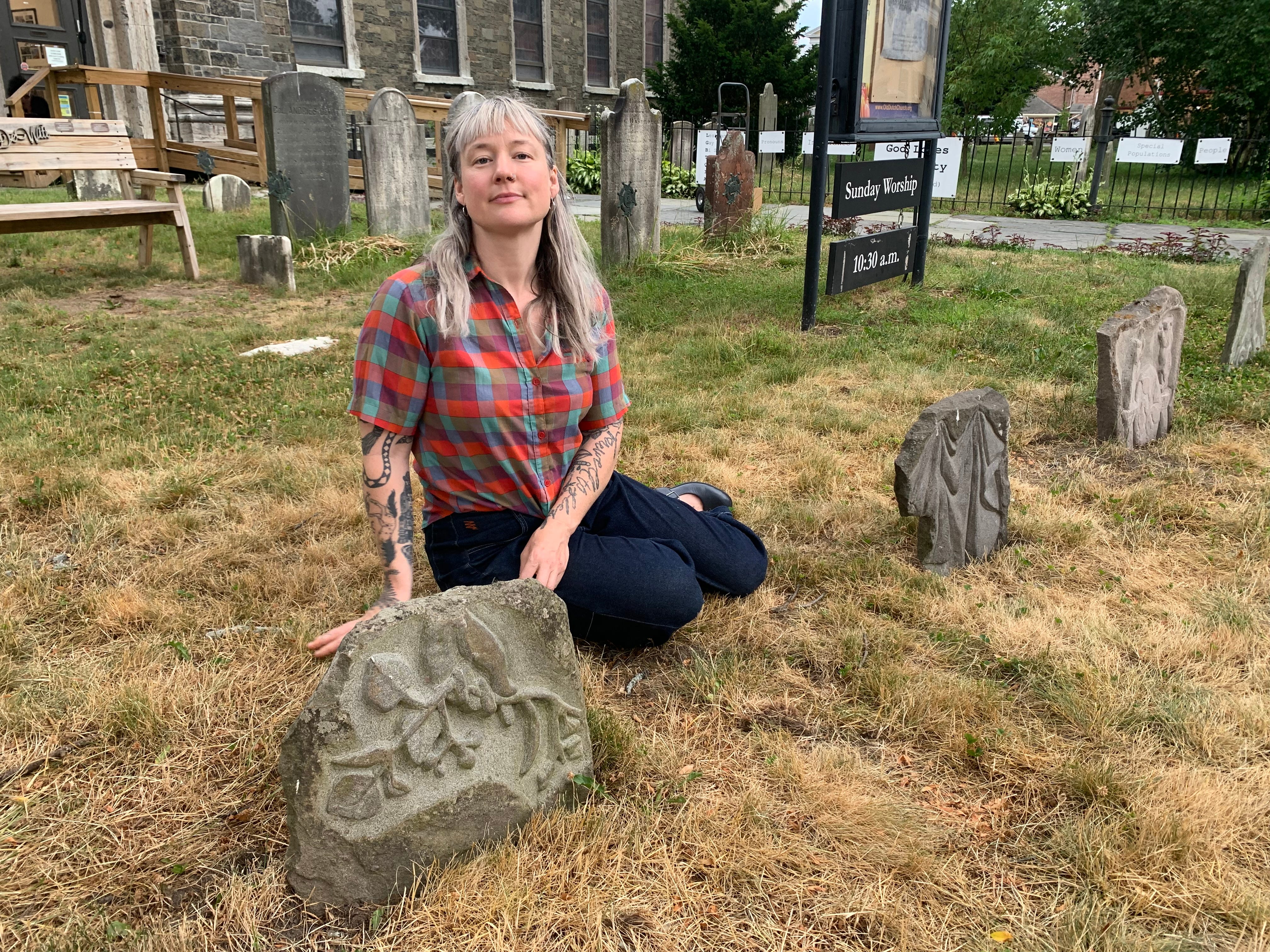
As a child, Zibby Jahns was preoccupied with matters more serious than most of her peers. The Kingston-based artist and professor at Rhode Island School of Design was fascinated by a black and white portrait of her great-great-grandfather and wanted to learn about her ancestors. She was beyond disturbed by the extinction of the passenger pigeon: She mourned the last two birds, born in captivity and taxidermied in a museum in Chicago. And unlike her sisters and the average Jewish child in the United States, Jahns actually wanted to go to Hebrew school to connect more deeply with her lineage.
“I’ve always been interested in the old and ghosts,” she said, speaking of the themes of her latest installation called “Here Lies the Rub” which is open at Old Dutch Church in Kingston until August 1st. “I have one foot in one world and one foot in the other world, but not in a morose way.”
“Here Lies The Rub” has similar themes to Jahns’ prior work. “Unfolding Complication,” from the fall of 2025, is a series of letters to her ancestors and fragments of archival information derived from extensive genealogical and academic research. It explores “modern notions of borders, trauma, colonization and the fabrication of whiteness,” said Jahns on her website.
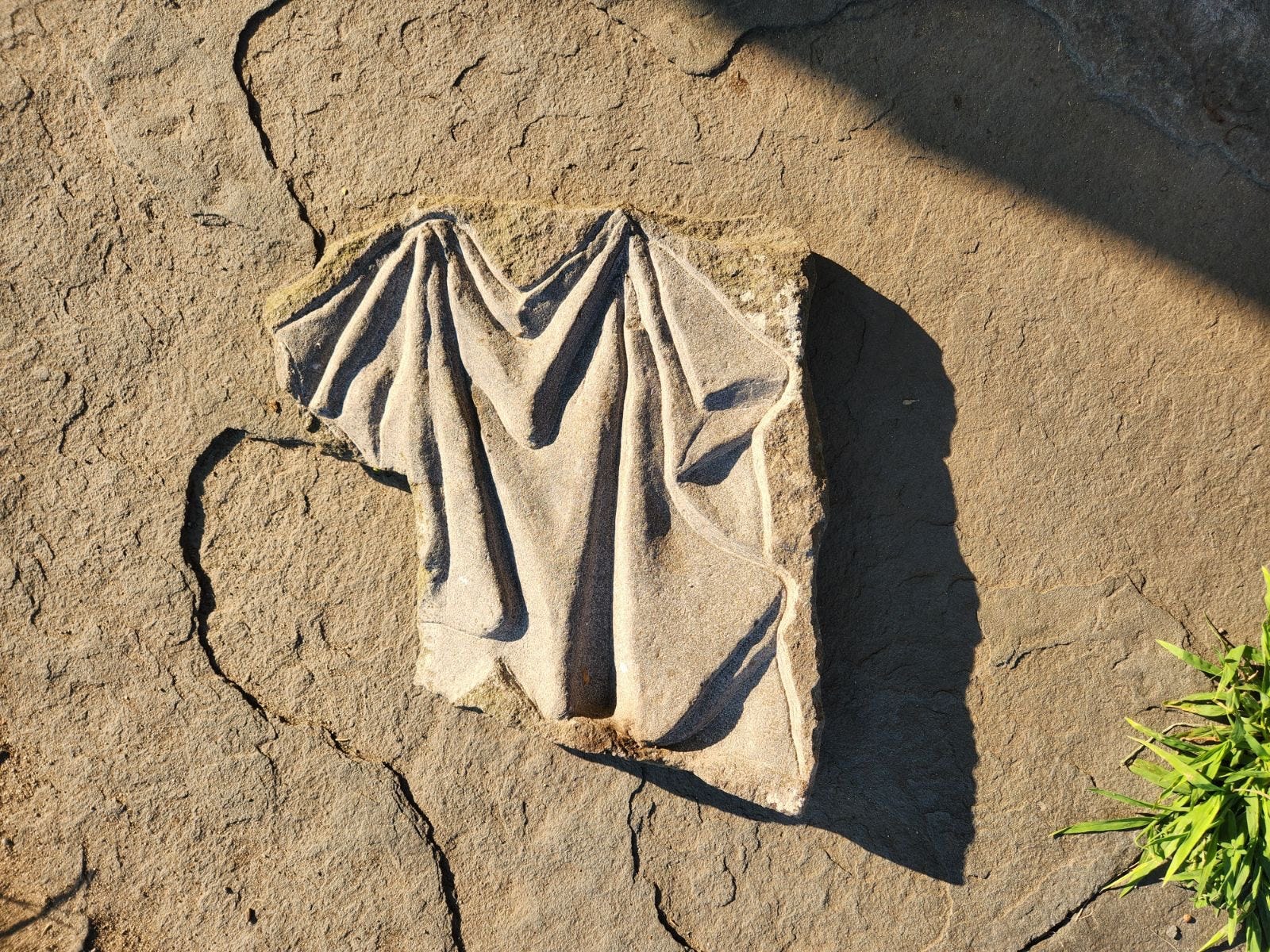
The outdoor portion of the exhibit includes four carvings—three that are bluestone, one that is slate—placed among the headstones of the cemetery. They depict a giant linden tree, a shroud, mythical lynxes and passenger pigeons.
Jahns wanted to “memorialize or consider these glimpses of lost life…in the slabs of bluestone quarried and used as the foundation of settler houses in the clear cut forests of the Hudson Valley.”
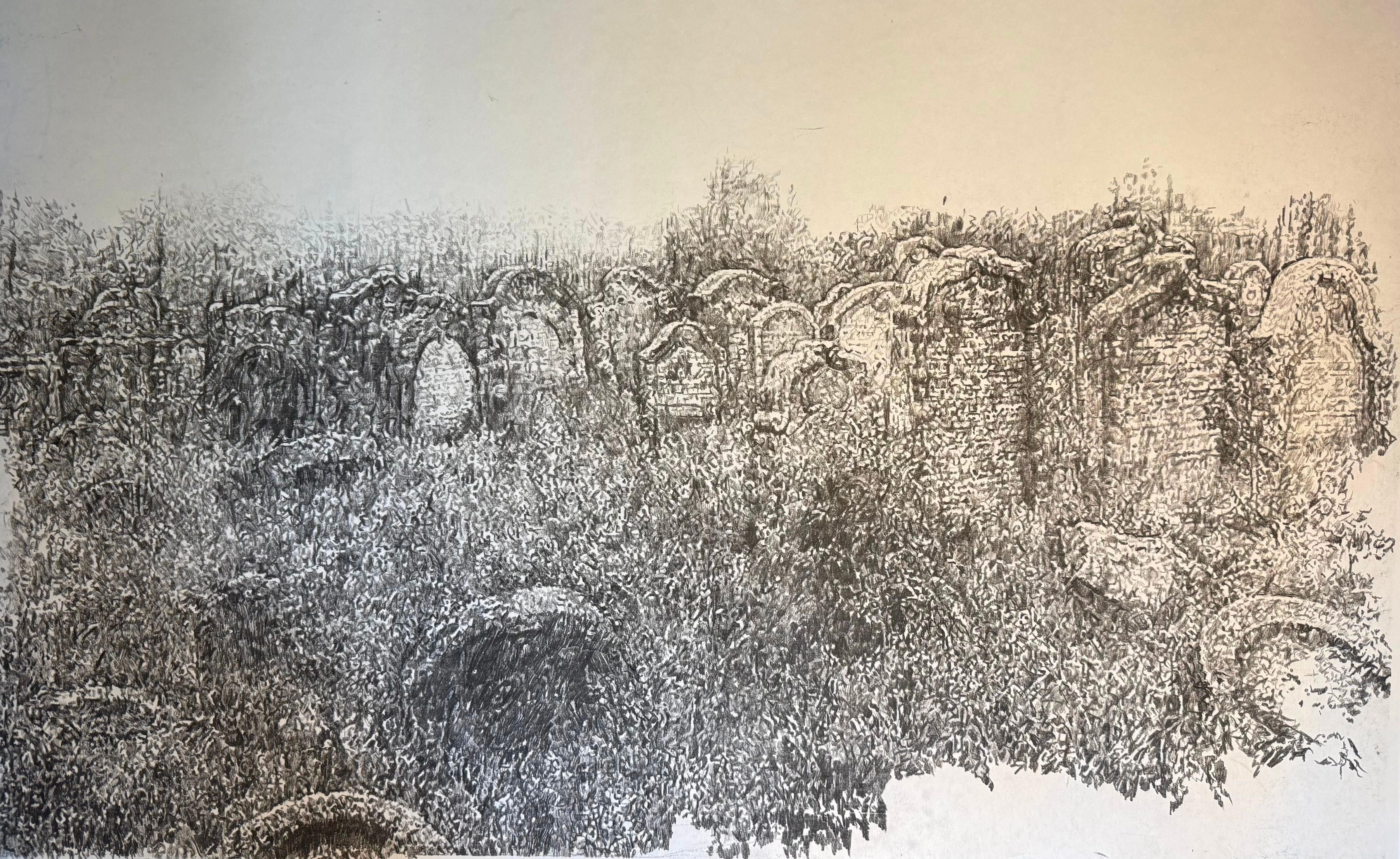
The indoor exhibit consists of drawings made from graphite on paper, an expression of a desire to “feel the headstones” of her ancestors and to imagine what their lives were like in Eastern Europe.
Jahns was specifically motivated to explore her lineage in the wake of October 7th, 2023, after Hamas militants invaded Israel and Israel responded with what is now widely recognized as a genocide against Palestinians in Gaza. She wanted to imagine what her Jewish ancestors, many of whom were rabbis, would have thought about this ongoing political moment. After countless hours of searching, she found the rabbinic writings of her great-great-grandfather, who was from a line of rabbis and immigrated to the U.S. from Hungary in the 1890s.
“He wrote that Israel is a spiritual site and always has been and always will be. But it as a political state…was a failure,” Jahns said. “[He said] we as Jews have come to be members of our own societies and communities, and we should really focus on how to be better members of our communities and focus on the places that we live.”
Going further back in time, Jahns found a modernized version of her great-great-great-grandfather’s gravestone, which was written in Yiddish and located in a cemetery in a Hungarian town called Berettyóújfalu. She used Google translate for the Yiddish and could tell it got some things wrong, but she sketched the gravestone with the translation, imperfections and all.
Another drawing is meant to appear like a rubbing of gravestones in a cemetery in Bavaria where a branch of her family was buried in the 1800s. That cemetery has since been desecrated. And a third is a sketch of a Google translation of a death certificate of her great-great-great-great-great-grandfather.
“I don’t have family buried in the U.S. until the 20th century, and it’s been really hard to find out anything about them before they arrived here by boat,” said Jahns. “I’ve been spending years working on that.”
Jahns is preoccupied with losses large and small, personal and seemingly distant. As she described in her exhibition text: “Who—or what—we mourn says more about our values than the value of those who have died. But with the scale of devastation we witness everyday, it is hard to feel a connection to the lives of our ancestors. It feels more important to grieve for every animal that goes extinct due to climate change or each child who dies by a U.S.–manufactured weapon. This exhibition is my attempt to rectify that dissonance, and bring past and present rituals around collective mourning into conversation.”